The state of the planet in 2025
- News
- Reports

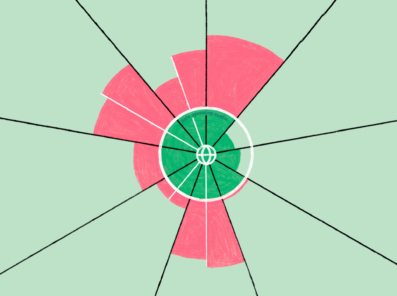
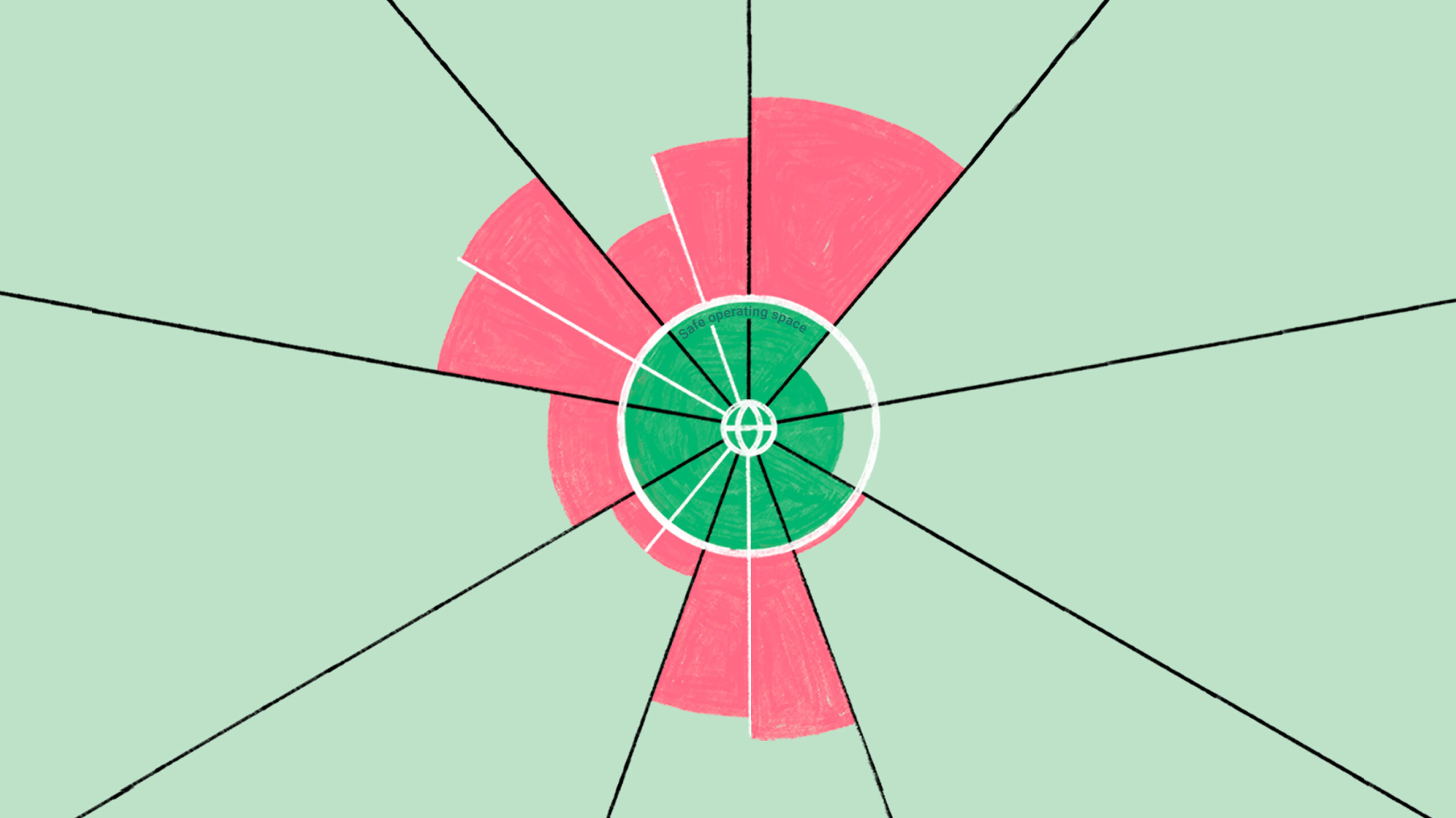
Nine Earth system processes define the conditions under which life on Earth, including human societies, have thrived. Together, they mark the safe operating space we must stay within. Scientists call them planetary boundaries.
When a boundary is transgressed, it signals that human pressure has moved beyond a precautionary limit. The risk of abrupt, potentially irreversible change to Earth systems increases. The consequences are not only ecological. They affect food systems, infrastructure, supply chains, and the conditions global economic activity depends on.
In 2025, seven of nine planetary boundaries were transgressed. Ocean acidification has recently crossed its threshold, joining climate change, biosphere integrity, land-system change, freshwater change, biogeochemical flows, and novel entities. Stratospheric ozone depletion and atmospheric aerosol loading remain within safe limits, and the ozone story is, in fact, one of the most instructive examples of coordinated international action in environmental history.
What has changed
The 2025 update from the Planetary Boundaries Science collaboration, published by the Potsdam Institute for Climate Impact Research, confirms that the overall trajectory has worsened. Climate change boundary conditions have narrowed. The biosphere integrity boundary remains strongly transgressed with no signs of recovery. The extinction rate for vertebrate genera is approximately 35 times higher than the typical background rate over the past 500 years.
One Earth system that deserves particular attention for Northern European investors is the Atlantic Meridional Overturning Circulation (AMOC). This large-scale ocean current redistributes heat across the Atlantic and shapes temperature patterns, sea levels, and agricultural conditions across Northern Europe. It is showing signs of weakening. As Arctic ice and the Greenland ice sheet melt, freshwater enters the North Atlantic and reduces the density differences that drive the current. If the AMOC crosses a tipping point, the consequences for Northern European climate conditions could be substantial and largely irreversible within human planning timescales.
Why it matters for investors
Planetary boundary transgression is not an abstract scientific concern. It describes shifts in the systems that shape markets. When forest cover falls below safe thresholds, it disrupts rainfall patterns and agricultural productivity. When biogeochemical flows are overloaded with nitrogen and phosphorus from agriculture, it degrades freshwater systems and coastal fisheries. When biosphere integrity erodes, the ecosystem services that underpin food production, water supply, and climate regulation become less reliable.
In 2025, natural disasters generated approximately USD 260bn in economic losses globally, with around 49 events each exceeding USD 1bn. More than half of those losses were in the United States. At the same time, global totals can understate impacts in less developed economies: Hurricane Melissa caused damage in Jamaica estimated at USD 8.8bn, equivalent to 41% of the country’s GDP.
Business interruption lawsuits linked to climate-related events have more than doubled in the US over the past decade, from approximately 290 to nearly 640 cases per year. These are not tail-risk scenarios. They are recurring material costs showing up in insurance markets, supply chains, and litigation dockets.
There is a workable framework
The planetary boundaries framework was not designed as an investment tool. It was designed to describe biophysical limits. Its relevance to investors has grown because those limits are now being exceeded, and the economic consequences are accumulating. Understanding where boundaries are transgressed, and where transgression is accelerating, helps identify where systemic risk is building and where demand for solutions will compound over time.
Summa Equity has used this framework to structure its thematic investment approach since 2016. Our Planetary Boundaries Report 2025 provides a detailed assessment of the current state of each boundary, the market and company implications, and, for the first time, a portfolio-level measurement of both the pressures our companies generate and the contributions they make to restoring a safe operating space for our planet, people and economy
Planetary Boundaries 2025
From science to measurement to action. Summa's first planetary boundaries assessment
Download reportThe Summa Summarum newsletter
Sign up to our newsletter
Latest readings
News
Close to home: reflections from Summa’s Annual Investor Meeting 2026
Read more
The state of the planet in 2025
Read more
The defining investment opportunity of our generation
Read more
Building leadership for an uncertain world: Summa Equity’s CEO Learning Journey at INSEAD
Read more
Summa Equity portfolio company NG Nordic named one of TIME’s World’s Most Impactful Companies 2026
Read more