
Land-based facilities and equipment to blue chip salmon farmers
Nofitech at a glance & key developments in 2025
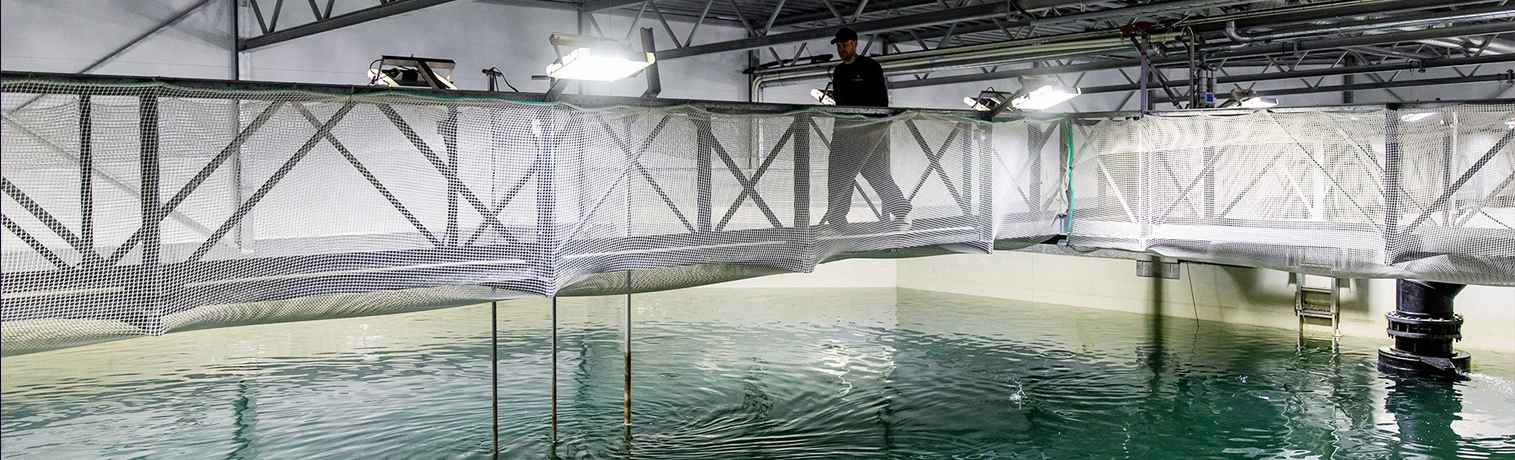
Nofitech provides land-based facilities and equipment to blue-chip salmon farmers. Its primary offering today is a recirculating aquaculture system (RAS), ModulRAS, which allows fish farmers to move parts of the fish’s growth cycle onto land, and offers facilities for the final growth stage, providing fish farmers with the option to locate all production on land.
Nofitech saw a 13% top-line growth during 2025 and momentum remains positive with a major new contract signed during the year and a ~NOK 4bn backlog.
- Year acquired
- 2021
- Revenue
- EUR 62m
- Location
- Norway
- Employees
- 98
- Website
- https://nofitech.com/
- Investment theme
- Sustainable Food
- Contact
- sebastian.sunde@summaequity.com
- SDG alignment
2, 12, 14
What are the challenges Nofitech addresses
-
15%
expected increase in aquatic food production by 2030
-
110k
escape of farmed salmon, which poses a threat to biodiversity through the risk of farmed salmon mixing with wild salmon populations
-
Who is impacted?
Salmon farmers, coastal communities, marine ecosystems and society at large are impacted by Nofitech’s land-based aquaculture systems. Farmers gain a more resource-efficient production model, while reduced interaction with natural habitats lowers pollution and disease risks, supporting ocean biodiversity and more sustainable seafood production.
-
Contribution
Nofitech contributes to Summa’s theory of change by enabling more sustainable aquaculture through land-based recirculating systems for post-smolt and grow-out production. By reducing reliance on open-sea farming, its solutions lower environmental pressure on marine ecosystems while supporting scalable, controlled and resource-efficient seafood production.
-
Risks to impact
Key risks to impact include regulatory uncertainty, high capital and infrastructure requirements limiting adoption, economic viability challenges, logistical complexity, and suboptimal system operation that could affect local water resources or biodiversity, potentially constraining the scale and effectiveness of land-based aquaculture solutions.